

Remote Hiring Tax Benefits Vancouver Businesses Get
Thinking about expanding your team without the overhead of a traditional office setup? Discover how Vancouver businesses are saving serious cash through remote hiring while keeping the taxman happy – it’s like finding money hidden in your old winter coat! Picture this: you’re renovating your Kitsilano home office, knee-deep in invoices and receipts, when you realize you’ve been sitting on a goldmine of tax savings. Just like that moment when you discover your old drill still works perfectly after being buried in the garage, remote hiring offers Vancouver businesses unexpected financial benefits that many entrepreneurs are just beginning to uncover. As someone who’s helped countless homeowners optimize their spaces for maximum efficiency, I’ve learned that the same principles apply to business operations – sometimes the smartest solutions are hiding in plain sight. The shift toward remote work isn’t just changing how we think about office design; it’s revolutionizing how Vancouver businesses approach their tax strategies. From the bustling tech hubs of Yaletown to the creative spaces in Mount Pleasant, companies are discovering that hiring remote talent comes with legitimate tax advantages that can significantly impact their bottom line.
Key Outtakes:
- Remote hiring eliminates traditional workplace setup costs that would otherwise be non-deductible personal expenses for employees
- Vancouver businesses can claim significant deductions for providing remote work allowances and equipment to employees
- Proper documentation of remote work arrangements enables tax-exempt benefits for both employers and employees
- Strategic remote hiring can reduce overhead costs while maintaining compliance with Canadian Revenue Agency requirements
- Understanding fair market value calculations helps maximize legitimate business expense deductions
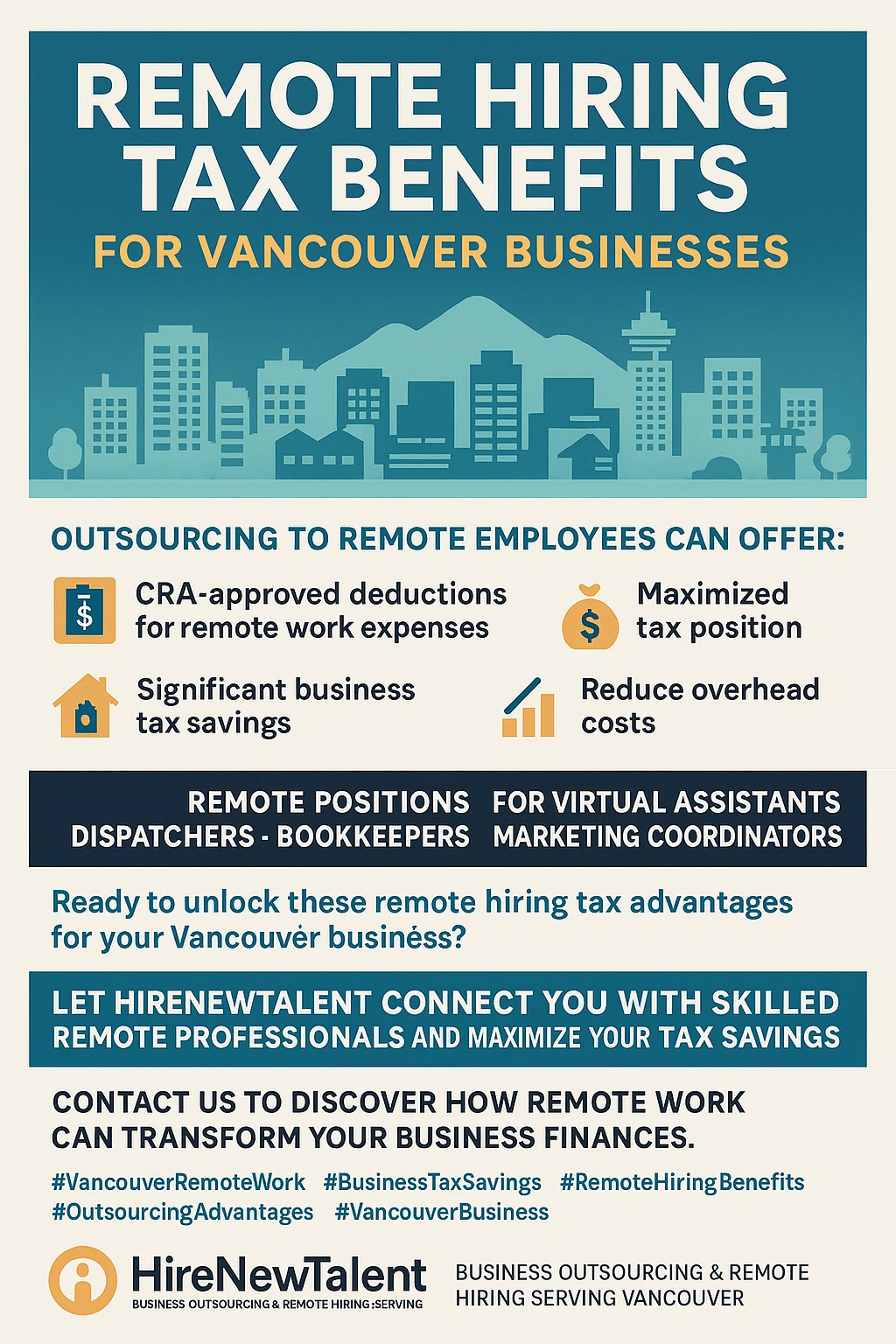
Understanding Remote Work Tax Deductions for Vancouver Employers

Remote hiring has transformed the traditional employment landscape, much like how open-concept designs revolutionized home layouts. When Vancouver businesses embrace remote work arrangements, they unlock a treasure trove of potential tax deductions that simply weren’t available in conventional office setups. The Canada Revenue Agency recognizes that remote work creates unique business expenses, and forward-thinking companies are learning to navigate these opportunities effectively. The foundation of remote work tax benefits lies in the employer’s ability to provide necessary tools and allowances to their remote workforce. Unlike the old days when employees absorbed commuting and workspace costs personally, remote arrangements allow businesses to legitimately support their team’s home office needs. This shift represents a fundamental change in how work-related expenses are categorized and claimed. Vancouver’s diverse business community, from the innovation corridors of False Creek to the established commercial districts of Richmond, is discovering that remote hiring strategies can substantially reduce their overall tax burden. The key lies in understanding which expenses qualify as legitimate business deductions and how to properly document these arrangements for CRA compliance.
Board and Lodging Benefits for Remote Work Arrangements
When we think about remote work benefits, our minds typically jump to internet allowances and home office equipment – but there’s a fascinating category of tax-exempt benefits that many Vancouver businesses overlook entirely. The CRA’s provisions for board and lodging benefits can apply to certain remote work situations, particularly when employees are required to work from locations that qualify as “remote work locations” under tax legislation.

The magic happens when your remote work arrangement meets specific criteria established by the Canada Revenue Agency. If an employee works at a location that’s 80 kilometers or more from the nearest established community with essential services, and they’re required to be there for at least 36 hours, the employer can provide tax-exempt allowances for accommodation and meals. This creates incredible opportunities for Vancouver-based companies with remote team members in rural British Columbia or other distant locations. What makes this particularly interesting for home improvement businesses is the parallel with special work sites. Just as a renovation contractor might need to provide accommodation for workers at a remote project location, businesses with truly remote employees can structure their compensation packages to include these tax-advantaged benefits. The key is ensuring that employees cannot reasonably establish a self-contained domestic establishment due to the remoteness of their work location.
Equipment and Transportation Allowance Deductions
The transition from traditional office setups to remote work arrangements creates unique opportunities for Vancouver businesses to optimize their expense structures while supporting their team’s productivity. Think of it like upgrading from basic hand tools to a comprehensive workshop setup – the initial investment pays dividends in efficiency and capability, while also generating legitimate tax deductions. Remote work equipment represents one of the most straightforward categories of business expense deductions available to Vancouver employers. When you provide laptops, monitors, ergonomic chairs, or specialized software to remote employees, these costs qualify as legitimate business expenses rather than taxable benefits to the employee. This represents a significant shift from traditional employment models where employees often absorbed these costs personally. The Canada Revenue Agency recognizes that remote work necessitates employer-provided equipment to maintain productivity and safety standards. Transportation benefits for remote workers operate under different rules than traditional commuting allowances, creating interesting opportunities for strategic tax planning. While regular commute costs remain personal expenses, transportation related to remote work locations can qualify for tax-exempt treatment. Recent CRA guidance clarifies that when remote employees travel between qualifying remote work locations, these transportation costs can be excluded from taxable income under specific conditions.
Fair Market Value Calculations and Documentation
Establishing fair market value for remote work benefits requires the same attention to detail that goes into pricing home improvement projects accurately. The CRA defines fair market value as the highest price obtainable between informed parties dealing at arm’s length, which means Vancouver businesses need to research comparable market rates for the benefits they provide. This isn’t about finding the cheapest option – it’s about demonstrating that your allowances reflect realistic market conditions in the Vancouver area. Documentation becomes crucial when claiming remote work expense deductions, much like keeping detailed records of material costs and labor hours during a renovation project. Employers must maintain comprehensive records showing the business purpose of each expense, the fair market value calculations used, and evidence that the benefits support legitimate work requirements. This includes employment contracts specifying remote work requirements, invoices for equipment purchases, and signed declarations confirming the employee’s work location and circumstances.
Strategic Tax Planning for Vancouver Remote Employers
Effective tax planning for remote hiring requires the same systematic approach that successful contractors use when estimating project costs – you need to understand all the variables before making commitments. Vancouver businesses operating in competitive markets like Burnaby’s tech sector or West Vancouver’s professional services industry are finding that strategic remote work policies can provide significant competitive advantages while optimizing tax efficiency.

The timing of remote work expense deductions follows specific CRA requirements that smart businesses can leverage for cash flow optimization. Unlike traditional office expenses that are incurred regardless of employee utilization, remote work allowances can be structured to align with project timelines or seasonal business cycles. This flexibility allows Vancouver companies to manage their tax liabilities more strategically while providing valuable support to their remote workforce. Regional considerations play a crucial role in maximizing remote work tax benefits, particularly for Vancouver businesses with team members spread across British Columbia’s diverse geography. The province’s varied landscape creates natural opportunities for legitimate remote work arrangements, from employees working in smaller communities like Squamish or Whistler to those based in more distant locations throughout the province. Understanding the specific tax implications of different work locations helps businesses structure arrangements that benefit both the company and their employees. Remote work compliance extends beyond simple expense tracking to encompass broader employment law considerations that affect tax treatment. Vancouver employers must ensure their remote work policies align with provincial employment standards while maximizing available tax benefits. This includes proper classification of workers, adherence to minimum wage and overtime requirements, and appropriate handling of workplace safety obligations for home-based employees.
Frequently Asked Questions
Can Vancouver businesses claim home office expenses for their remote employees?
Vancouver businesses cannot directly claim their employees’ home office expenses, but they can provide tax-advantaged allowances and equipment that help employees offset these costs. The key distinction is that employers can provide reasonable allowances for remote work expenses without creating taxable benefits for employees, provided the arrangements meet CRA requirements. This creates a win-win situation where businesses get legitimate expense deductions while employees receive support for their home office setup without additional tax burden. The most effective approach involves providing direct payments for specific remote work needs rather than reimbursing personal expenses. For example, a Vancouver company might provide monthly internet allowances, purchase ergonomic furniture, or supply necessary technology directly to remote employees.
How do transportation benefits work for remote employees in Vancouver?
Transportation benefits for remote workers operate differently than traditional commuting allowances, creating unique opportunities for Vancouver businesses with distributed teams. While regular commute costs between home and a fixed office location remain personal expenses, transportation related to qualifying remote work situations can receive tax-exempt treatment. This applies particularly when employees travel between approved remote work locations or when their work requires temporary relocation to distant sites. The Canada Revenue Agency requires specific documentation and circumstances for transportation benefits to qualify for tax exemption. Remote employees must be working at locations that meet the definition of remote work sites, typically 80 kilometers or more from established communities, and their duties must require them to be present for at least 36 hours including travel time.
What documentation do Vancouver employers need for remote work tax deductions?
Proper documentation for remote work tax deductions requires the same systematic approach that contractors use for project documentation. Vancouver businesses must maintain comprehensive records including employment contracts specifying remote work requirements, invoices and receipts for all equipment and allowances provided, fair market value calculations for benefits, and signed employee declarations confirming work locations and arrangements. The CRA expects businesses to demonstrate clear business purposes for all remote work expenses and to show that allowances reflect reasonable market rates. This documentation becomes particularly important during audits, where thorough record-keeping can mean the difference between accepted deductions and costly reassessments.
Wrapping Up
Understanding remote hiring tax benefits represents a game-changing opportunity for Vancouver businesses ready to embrace the future of work arrangements. From equipment allowances that reduce both employer costs and employee tax burdens to strategic transportation benefits for truly remote locations, the tax advantages create compelling reasons to expand your remote hiring strategy. Just like a well-planned home renovation that increases both functionality and property value, implementing proper remote work tax strategies delivers immediate benefits while positioning your business for long-term success. At HireNewTalent, we understand that navigating remote work tax benefits can feel as complex as planning a major home renovation project. Our Vancouver-based team specializes in helping businesses throughout Kitsilano, Mount Pleasant, and Richmond develop compliant remote work strategies that maximize tax advantages while building exceptional distributed teams. Whether you’re looking to hire remote talent or optimize your existing remote work policies, we provide the expertise and support needed to transform your hiring approach into a strategic advantage.