

Remote Hiring Mistakes Vancouver Businesses Must Avoid
Struggling to build the perfect remote team for your Vancouver business? You’re not alone – navigating the world of virtual hiring is like trying to rewire your home’s electrical system while blindfolded, and even seasoned pros make costly mistakes that can torpedo their success. [IMAGE PLACEHOLDER FOR IMAGE1] Picture this: you’re a Vancouver business owner who just spent three months “interviewing” what seemed like the perfect remote candidate, only to discover they can barely string together a coherent email or show up to virtual meetings on time. Sound familiar? I’ve been there, and trust me, it’s about as fun as discovering your supposedly waterproof basement is actually more like a swimming pool during Vancouver’s rainy season. Remote hiring isn’t just regular hiring with a webcam slapped on top – it’s a whole different beast that requires its own toolkit, strategies, and mindset. The shift to remote work has been like watching your neighborhood transform overnight. One day everyone’s commuting to glass towers in downtown Vancouver, and the next, talented professionals are working from cozy home offices in Kitsilano, spacious lofts in Gastown, or quiet retreats in Richmond. While this opens up incredible opportunities to tap into global talent, it also creates a minefield of potential hiring disasters that can cost your business time, money, and sanity.
Key Outtakes:
- Remote hiring requires completely different evaluation criteria and processes than traditional in-person recruitment
- Communication skills and self-motivation become critical factors that need specific assessment in virtual environments
- Setting clear expectations and creating structured onboarding processes are essential for remote employee success
- Technology proficiency and cultural fit evaluation methods must be adapted for digital-first interactions
- Legal compliance and proper classification of remote workers vary significantly across jurisdictions
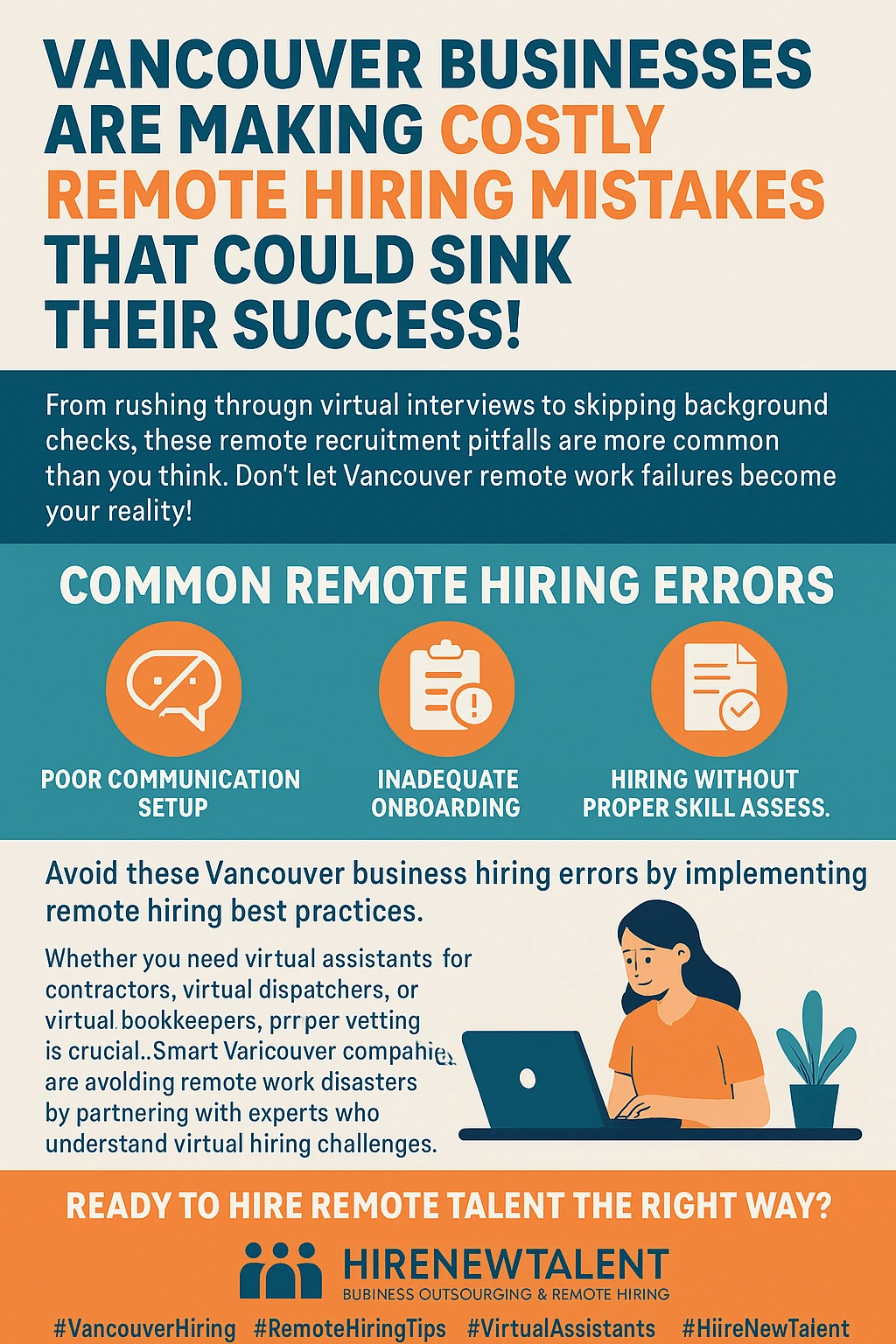
The Foundation Problem: Treating Remote Hiring Like Regular Hiring
 Here’s the thing that drives me absolutely bonkers: so many Vancouver businesses think they can just copy-paste their existing hiring process onto Zoom and call it a day. It’s like trying to use the same techniques you’d use to install hardwood floors when you’re actually laying tile – sure, there are some similarities, but you’re going to end up with a hot mess if you don’t adapt your approach. Remote work fundamentally changes what skills matter most. That charming candidate who lights up the room during in-person interviews might completely disappear behind a screen, struggling to articulate thoughts clearly in writing or maintain engagement during video calls. On the flip side, someone who seems quiet or reserved in traditional settings might absolutely shine in a remote environment where they can think before speaking and communicate more deliberately. The skills that make someone successful in a bustling office environment – like reading body language, participating in spontaneous hallway conversations, or thriving on immediate feedback – don’t necessarily translate to remote success. Instead, you need people who can work independently for hours without supervision, communicate proactively about roadblocks, and stay motivated when their “office” is their kitchen table and their only colleague interactions happen through screens.
Communication Skills: The Make-or-Break Factor
 [IMAGE PLACEHOLDER FOR IMAGE2] Building on this foundation, let’s talk about the skill that can make or break your remote hiring decisions: communication. I learned this lesson the hard way when I hired someone whose resume looked like they’d written the handbook on digital marketing, but who sent emails that read like they’d been translated through three different languages by a confused robot. In a remote environment, written and verbal communication isn’t just important – it’s your lifeline. When your team can’t tap someone on the shoulder or read facial expressions during meetings, every email, message, and video call becomes crucial for maintaining productivity and team cohesion. Yet so many hiring managers skip proper communication assessments because they assume anyone can write an email or hold a conversation. Here’s what I’ve learned works: incorporate specific communication tests into your process. Give candidates a short written exercise that mimics real scenarios they’ll face in the role. Ask them to explain a complex concept during the interview and pay attention to how clearly they articulate their thoughts. Watch how they handle technical difficulties during video calls – do they communicate the problem clearly and work toward solutions, or do they get flustered and shut down? These small moments reveal how they’ll handle the daily communication challenges of remote work. Don’t forget about different communication styles, either. Some people are natural writers but struggle with video calls, while others shine in live conversations but send confusing emails. Understanding these nuances becomes especially important when building diverse remote teams where clear communication bridges geographical and cultural gaps.
Setting Expectations: The Art of Remote Onboarding
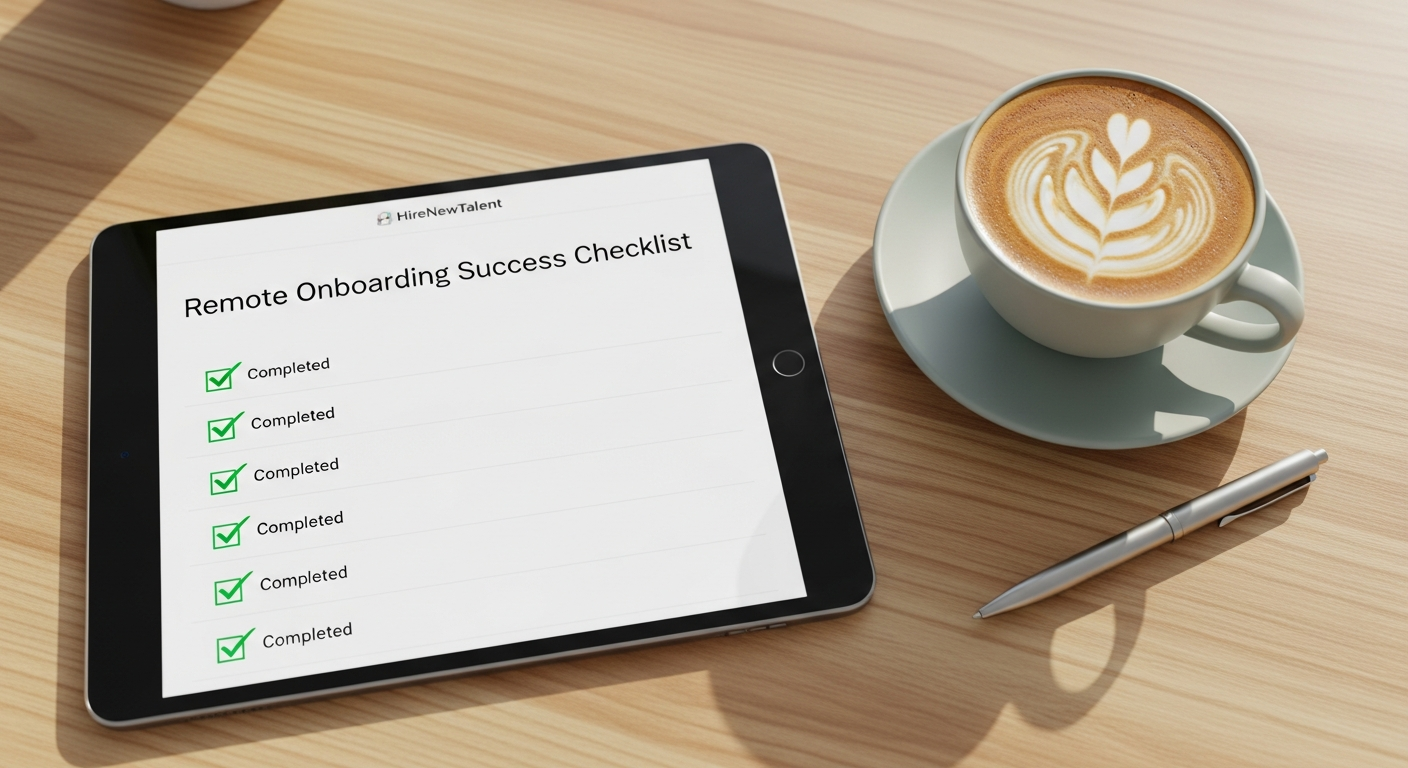 [IMAGE PLACEHOLDER FOR IMAGE3] The communication assessment naturally leads us to another critical area where businesses stumble: setting clear expectations from day one. I’ve seen too many companies hire great remote candidates only to lose them within the first few months because nobody clearly defined what success looked like in a virtual environment. Think about it this way: when someone starts working in your office, they can observe the company culture, see how colleagues interact, and get a feel for the pace and expectations just by being present. Remote employees miss all those subtle cues, which means you need to be incredibly explicit about everything from core working hours to response time expectations for emails. The most successful remote hires I’ve worked with had crystal-clear 30-60-90 day plans that outlined specific goals, introduced them to team members in structured ways, and provided regular check-ins to ensure they felt connected and supported. This isn’t just about sending them a laptop and a welcome email – it’s about creating a comprehensive experience that helps them understand not just what they need to do, but how to do it within your company’s unique culture and workflow.
Creating Structure That Works
Successful remote onboarding requires deliberate structure that replaces the organic learning that happens in physical offices. This means scheduling virtual coffee chats with team members, creating detailed documentation about processes and expectations, and establishing regular feedback loops. The investment in thorough onboarding pays dividends in employee retention and productivity, while rushed or minimal onboarding sets everyone up for frustration and failure.
Technology and Cultural Fit in the Digital Age
Moving beyond onboarding, we need to address two interconnected challenges that trip up even experienced hiring managers: evaluating technology skills and assessing cultural fit in virtual environments. These factors become exponentially more important when your entire working relationship exists through digital channels. Let’s start with technology proficiency. I’m not talking about whether someone can turn on their camera for a Zoom call – I’m talking about their comfort level with the digital tools that become essential for remote collaboration. Can they navigate project management platforms intuitively? Do they understand basic troubleshooting when technology inevitably hiccups? How quickly do they adapt to new software platforms? These skills matter because in remote work, technology friction translates directly into productivity loss and team frustration. Cultural fit assessment becomes trickier but arguably more important in remote settings. Without the natural relationship-building that happens through shared physical spaces, you need team members who can build trust and rapport through screens and text. Look for candidates who ask thoughtful questions about team dynamics, show genuine interest in company values, and demonstrate emotional intelligence in how they discuss past workplace challenges.
Testing Real-World Skills
The most effective approach I’ve found combines practical skill assessments with cultural evaluation. Give candidates a small paid project that mirrors actual work they’d be doing, and pay attention to both the quality of their output and how they communicate throughout the process. Do they ask clarifying questions? Do they provide updates proactively? How do they handle feedback? These real-world interactions reveal far more about someone’s remote work potential than any interview question ever could.
The Legal Landscape: Compliance and Classification
After focusing on skills and cultural fit, we need to tackle what might be the most dangerous mistake Vancouver businesses make: ignoring the legal complexities of remote hiring. This isn’t just about dotting i’s and crossing t’s – getting this wrong can result in massive financial penalties and legal headaches that make a leaky roof seem like a minor inconvenience. When you hire remote workers, especially those located outside British Columbia or Canada, you’re entering a complex web of labor laws, tax obligations, and compliance requirements that vary dramatically by jurisdiction. The contract that works perfectly for your Vancouver-based employees might be completely invalid for someone working from another province or country, leaving you exposed to significant legal risks. The distinction between employees and contractors becomes even more crucial in remote work arrangements. Many businesses mistakenly classify remote workers as independent contractors to simplify compliance, but if these workers function like employees – receiving training, using company equipment, working set hours, or being managed like staff – you could face reclassification penalties that include back taxes, benefits, and fines.
Building Compliant Remote Teams
Smart Vancouver businesses work with employment specialists or use Employer of Record services when hiring internationally, ensuring they stay compliant with local regulations while accessing global talent. This investment in proper legal structure pays for itself by avoiding the astronomical costs of compliance violations and creates a foundation for sustainable remote team growth.
Frequently Asked Questions
How do I assess if a candidate can work independently in a remote environment?
Look for specific examples in their work history where they managed projects with minimal supervision or worked in roles requiring self-direction. During interviews, ask about their home office setup, daily routine strategies, and how they stay motivated without direct oversight. Pay attention to how they structure their responses – organized, thoughtful answers often indicate good self-management skills.
What’s the biggest red flag to watch for during remote interviews?
Poor communication during the interview process itself is the biggest warning sign. If candidates struggle to articulate thoughts clearly, fail to ask relevant questions about the role, or have technical difficulties they can’t troubleshoot, these issues will only magnify in a remote work environment where clear communication is essential for success.
Should I hire remote workers as employees or contractors?
This depends on the level of control and integration you need. If you’re providing training, setting specific work hours, supplying equipment, or managing them like staff, they should likely be classified as employees. Misclassifying workers can result in significant penalties, so consult with employment law experts when in doubt, especially for international hires.
Wrapping Up
Building a successful remote team for your Vancouver business doesn’t have to feel like navigating a home renovation project without blueprints. By avoiding these common hiring mistakes – treating remote hiring like traditional hiring, skipping communication assessments, neglecting proper onboarding, ignoring technology and cultural fit, and overlooking legal compliance – you can build a distributed team that drives real results for your business. At HireNewTalent, we understand that successful remote hiring requires the same attention to detail and strategic thinking that goes into any major home improvement project. Whether you’re looking to expand your team across Vancouver neighborhoods like Kitsilano, Gastown, or Richmond, or you’re ready to tap into global talent, we help businesses build remote teams that actually work. Contact us today to learn how we can help you avoid these costly mistakes and find the find the right people for your growing business.