

You’ve got a solid home improvement business to run, and the last thing you need is to spend weeks hunting for the right office support while jobs pile up on your schedule. This guide walks you through exactly how to find and hire remote staff who can handle the back-office work so you can stay focused on the tools in your hands. [IMAGE PLACEHOLDER FOR IMAGE1] Running a home improvement operation in Vancouver means juggling a lot. There are estimates to send, appointments to book, invoices to chase, and phones that don’t stop ringing. At HireNewTalent, we see this constantly – contractors and service companies who are brilliant at the hands-on work but stretched thin when it comes to keeping the business side organized. Hiring someone in-house feels expensive. Hiring nobody feels unsustainable. That’s exactly where remote staff come in. The good news is that the remote hiring process has gotten much more straightforward over the past few years. The tools are better, the talent pool is wider, and there’s a clear playbook for getting it right – whether you’re looking for a virtual dispatcher, a bookkeeper, or someone to handle your online presence.
Key takeaways
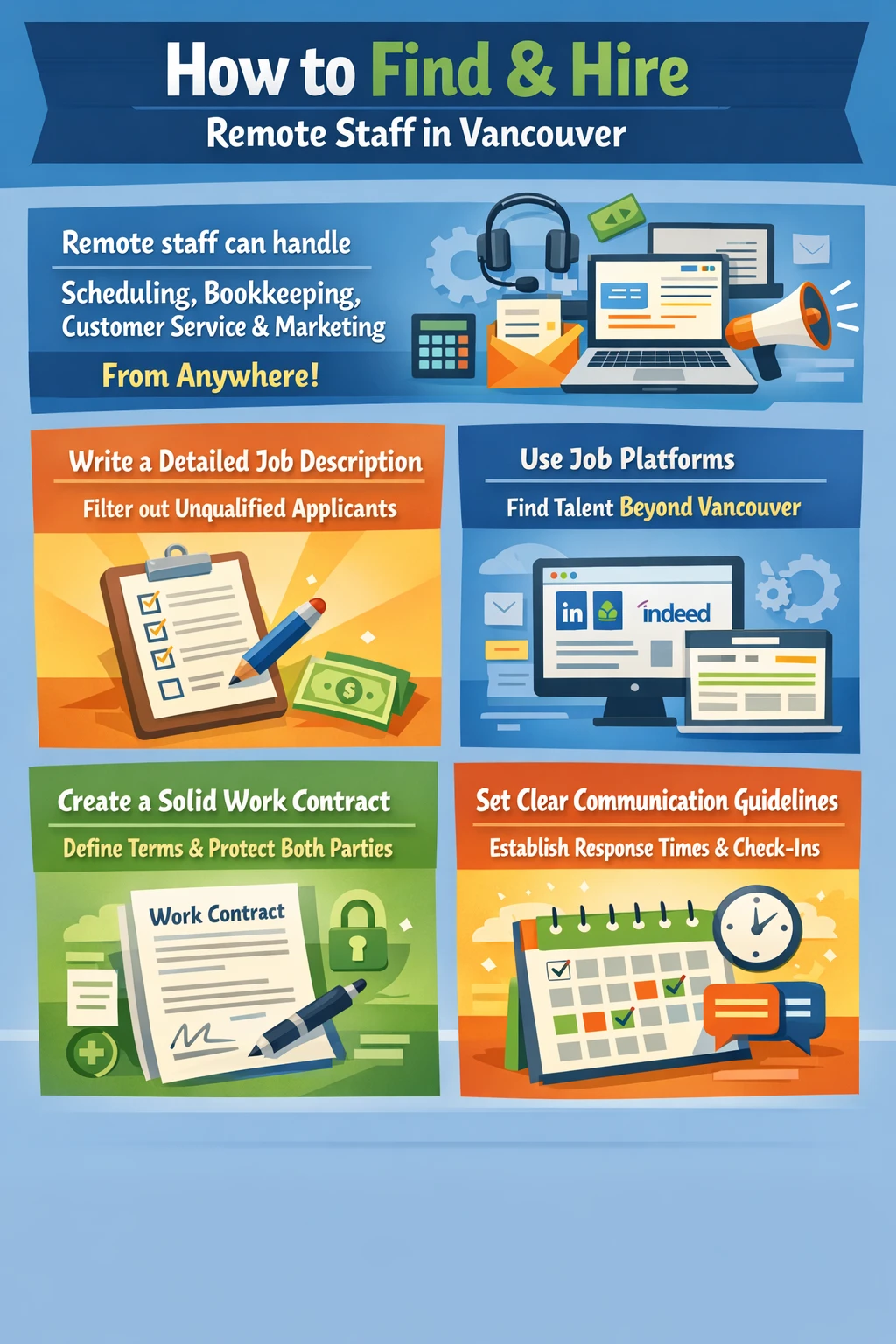
- Remote staff can handle scheduling, bookkeeping, customer service, and marketing without ever setting foot in your office or job site.
- Writing a specific, detailed job description before you post anywhere will save you significant time sorting through unqualified applicants.
- Platforms like LinkedIn, Indeed, and remote-specific job boards give you access to candidates well beyond Vancouver’s local market.
- A proper work contract – covering deliverables, payment terms, and confidentiality – protects both you and the person you hire.
- Research shows that 31% of remote employees leave within the first three to six months, which makes a solid onboarding process more important than most people realize.
- Setting clear communication expectations from day one – response times, check-in schedules, preferred tools – prevents most of the problems that cause remote arrangements to fall apart.
What hiring remote staff actually means for a home improvement business
 Hiring remote staff means bringing on workers who handle their responsibilities from their own location, using phone, email, video calls, and shared software to stay connected with your operation. For a home improvement company, that typically means roles that don’t require someone to be on a job site – think scheduling, client follow-up, quote preparation, bookkeeping, and social media management. The arrangement works because most of the administrative work that slows down a trades business is location-independent. A virtual dispatcher in another province or another country can answer your phones, confirm bookings, and send appointment reminders just as effectively as someone sitting in a back office. The client doesn’t know the difference. What they notice is whether someone picked up the call and handled it professionally. We see a lot of home improvement businesses in the Vancouver area reach a certain size where the owner is doing three jobs at once – the actual trade work, the client communication, and the business administration. That’s when things start slipping. Hiring one solid remote team member for the administrative side can change the picture dramatically.
The roles that make the most sense to hire remotely
 Not every position works well at a distance, but quite a few do. For a home improvement or general contracting business, the remote roles that tend to deliver the most value are the ones tied to communication and coordination. Virtual dispatchers handle incoming calls, book appointments, manage your calendar, and follow up with clients after jobs are complete. Virtual bookkeepers track expenses, send invoices, and keep your numbers clean so tax season isn’t a nightmare. Virtual marketing assistants manage your social profiles, respond to Google reviews, and help with basic content. Virtual service coordinators sit somewhere in between – part scheduler, part client liaison, part administrative support. Older homes in neighborhoods like Kitsilano and Dunbar often need ongoing maintenance work, and the clients there tend to expect responsive, professional communication. Having a dedicated person handling that follow-up – without pulling you off a job – makes a real difference in how your business is perceived. The common thread across all these roles is that they require reliability, good written communication, and the ability to work independently. That last point matters. A remote hire who needs constant hand-holding to complete basic tasks will cost you more time than they save.
Where to actually find qualified remote candidates
This is where a lot of business owners get stuck. You know you need help, but you’re not sure where to look that isn’t just a flood of unqualified applicants. Job boards are a practical starting point. LinkedIn, Indeed, and Glassdoor all have solid search functions that let you filter for remote-specific candidates. If you want to narrow your search further, platforms like FlexJobs focus specifically on remote and flexible work arrangements, which means the candidates there are already self-selected for this kind of role. For virtual assistants and contractors specifically, Upwork connects you with freelancers who have verified ratings and client reviews – you can see exactly what past clients said about them before you reach out. Your existing network is underrated. If you know other contractors or business owners who use remote staff successfully, ask who they work with and whether they’d pass along a referral. A recommendation from someone whose judgment you trust is worth more than any job posting algorithm. Staffing agencies that specialize in remote or virtual hiring are worth considering if you need someone quickly or want a more hands-off search process. Firms like Robert Half handle remote placements across administrative and finance roles, and there are remote-specific staffing operations that pre-screen candidates for communication skills and reliability before you ever see a resume. Working with an agency costs more upfront, but it can cut weeks off the hiring timeline. A word of caution on social media hiring: it’s growing in popularity, but the signal-to-noise ratio is low. You’ll get a high volume of applicants, and sorting through them takes time. It works better as a supplementary channel than a primary one.
How to structure the hiring process so it actually works
The single biggest mistake people make when they hire remote staff for the first time is skipping the groundwork. They post a vague job description, do one quick interview, and then wonder why the person isn’t performing to expectations three weeks in. Start with a clear, specific job description. List the actual responsibilities – not just “administrative support” but “answering inbound calls, booking appointments in our scheduling software, and sending job confirmation emails to clients.” Include the tools the person will need to use, the hours you expect them to be available, and whether you need them in a specific time zone. The more specific you are, the more your applicants self-select appropriately, and the less time you spend reading through people who aren’t a fit. Video interviews are non-negotiable for remote hires. You need to see how someone presents themselves, how they handle questions on the spot, and whether they have a professional, quiet workspace. A phone call tells you far less. During the interview, ask directly about their experience working independently – what tools they’ve used, how they prefer to communicate updates, and how they handle situations where they’re unsure what to do. These aren’t trick questions. You want someone who can give you a clear, confident answer. For roles that involve client communication, consider asking shortlisted candidates to complete a brief paid task. Ask them to draft a follow-up email to a client, or respond to a sample inquiry. You’ll learn more from that ten-minute exercise than from an hour of general interview questions. Check references. This sounds obvious, but a lot of people skip it for remote hires because they feel more transactional. Don’t. Ask references specifically whether they would hire the person again and why. That question cuts through polite non-answers faster than anything else. For candidates from platforms like Upwork, their on-platform reviews function as references – read them carefully. The Canadian government’s Employment and Social Development Canada website has useful guidance on employment classifications, contractor relationships, and your obligations as an employer, which is worth reviewing before you finalize any arrangement.
Getting the contract and communication right
A written contract is not optional. For a remote hire – whether they’re a contractor or an employee – you need a document that spells out the scope of work, the rate of pay, how and when payment happens, what information is confidential, and what “done” looks like for each deliverable. This doesn’t have to be a thirty-page legal document. It does need to be specific. If you’re hiring a virtual bookkeeper, the contract should describe exactly what they’re responsible for tracking, what software they’ll use, and what format they’ll deliver reports in. Vagueness in a contract creates disagreements later. On communication: set expectations before the person starts, not after. Agree on which platform you’ll use for daily messages (most businesses use Slack or a simple group text thread for quick questions and email for anything that needs a paper trail). Decide how quickly you expect responses – within two hours during business hours is a reasonable standard for most roles. Schedule a brief weekly check-in call. Fifteen minutes is usually enough to stay aligned and catch any small problems before they become bigger ones. We get calls from businesses in areas like Mount Pleasant and East Vancouver where the owner tried a remote hire, it didn’t work out, and they’re convinced remote staffing doesn’t work for trades companies. When you dig into what happened, it’s almost always a communication breakdown – nobody set expectations, nobody scheduled regular check-ins, and the working relationship just drifted. The remote model works fine. It just requires more intentional structure than having someone down the hall. For guidance on remote work best practices, the Remote work resources hub has practical frameworks covering contracts, onboarding, and management that are worth bookmarking.
Onboarding your new remote hire properly
 The hiring process ends when someone signs the contract. The work of making them effective starts right after. A remote hire can’t learn by osmosis the way an in-office employee might. They can’t overhear how you handle a difficult client call or watch how your team communicates with each other. Everything they need to know has to be written down or recorded. That sounds like a lot of work upfront, and it is – but it pays off quickly. Before their first day, make sure they have access to every tool they’ll need. That means logins to your scheduling software, your invoicing system, and whatever you use for internal communication. Have a written overview of how your business operates – your services, your service areas, how you handle quotes, your typical client communication style. Record a short video walkthrough of your main software if you can. New hires retain more from a three-minute screen recording than from a written manual. Plan for more check-ins in the first two weeks than you think you need. Daily fifteen-minute calls are not excessive for someone just starting. This is when questions pile up, when small misunderstandings get corrected before they become habits, and when the new person starts to feel genuinely connected to your operation rather than just doing tasks in isolation. The retention data here is worth taking seriously. Research consistently shows that 31% of employees leave within the first three to six months. Most of those departures trace back to onboarding problems – feeling unsupported, unclear expectations, or simply not feeling like they belong. Spending an extra two weeks being attentive at the start is far less costly than hiring all over again.
Frequently asked questions
After working with home improvement businesses across Vancouver and the surrounding area, we hear a lot of the same questions come up when people are considering their first remote hire. Here are the ones that come up most often.
How much does it cost to hire remote staff?
The cost varies significantly depending on the role, the person’s location, and whether you’re bringing them on as a contractor or an employee. A virtual assistant working on a contract basis might cost anywhere from $15 to $40 per hour depending on their experience and where they’re based. A more specialized hire – a bookkeeper or a marketing coordinator with a strong track record – will sit at the higher end of that range or above it. Going through a staffing agency adds a placement fee, but it reduces the time you spend searching and vetting. For most small home improvement businesses, starting with a part-time contractor for 15 to 20 hours per week is a practical way to test the arrangement before committing to something more substantial.
Do I need to worry about Canadian employment law if I hire someone in another province or country?
Yes, and it’s worth getting this right before you hire. If you’re bringing someone on as a full-time employee, you’re responsible for source deductions, employment standards compliance, and the specific rules that apply in the province where the employee is located – not necessarily yours. Hiring internationally adds another layer involving work authorization and tax implications. Many businesses in this situation hire remote support staff as independent contractors specifically to avoid some of that complexity, but the classification has to be genuine – a contractor who works exclusively for you, follows your schedule, and uses your tools may legally be considered an employee regardless of what the contract says. Reviewing the Canada Revenue Agency’s guidance on worker classification before you finalize your arrangement is a practical first step.
What if a remote hire doesn’t work out?
It happens, and it’s usually less catastrophic than people fear – especially if you’ve hired on a contract basis with clear deliverables. The best protection is a solid contract that specifies notice periods and what happens to work in progress if the arrangement ends. A 30-day notice clause on both sides is reasonable for ongoing roles. If someone isn’t performing, address it directly and early. Remote work can create ambiguity about expectations, and sometimes what looks like underperformance is actually a communication problem that can be fixed with a direct conversation. If you’ve given clear feedback and the issues continue, ending the arrangement professionally and promptly is better than letting it drag on. Keep your records of communications and agreed deliverables – these matter if there’s any dispute about payment.
Can a virtual assistant really handle client communication for a trades business?
Honestly, yes – and more effectively than most people expect. The key is the onboarding you do. A virtual assistant who understands your services, your pricing structure, how you schedule jobs, and your communication style can handle the majority of inbound inquiries without involving you. They won’t be able to answer highly specific technical questions about the work itself, so you’ll want a clear handoff process for anything that requires your expertise. But the routine stuff – booking consultations, confirming appointment times, sending follow-up messages after jobs, handling general questions – all of that can be delegated successfully.
Wrapping up
Finding and hiring remote staff isn’t complicated, but it does require doing the foundational work properly – a clear job description, a thorough interview process, a solid contract, and a real onboarding plan. Skip any of those steps and you’re setting yourself up for frustration. Do them right, and you end up with a reliable person handling the administrative side of your business so you can stay focused on the work that actually requires your expertise and presence on site. At HireNewTalent, we work with home improvement businesses across Vancouver and the surrounding communities who are figuring out exactly this kind of operational challenge. If you’re not sure where to start, or you’ve tried remote hiring before and it didn’t go the way you hoped, give us a call. We’ll help you think through what your business actually needs and figure out the most practical path forward.