

You’re ready to bring on remote help for your home improvement business, but you’re not sure who to trust or what to watch out for. This guide walks you through the real green flags and red flags when hiring remote team members, so you can make a smart hire the first time. [IMAGE PLACEHOLDER FOR IMAGE1] Running a home improvement operation in Vancouver means you’re juggling jobs, schedules, customer calls, and supplier logistics all at once. At some point, you realize you need help – but not necessarily another body on the job site. Virtual assistants, remote bookkeepers, virtual service coordinators, and online dispatchers have become a genuine option for contractors who want to stay lean without losing control. At HireNewTalent, we work with homeowners and contractors across the area who are figuring out exactly this question: how do you hire someone you’ll never meet in person and actually trust them with your business? The Vancouver market moves fast. Between the pace of renovation work, the demand from neighborhoods like Kitsilano where older character homes seem to constantly need updating, and the sheer volume of coordination required to keep a small crew running, remote support staff can make a real difference. But only if you hire the right person.
Key takeaways
- Clear, responsive communication in the first 48 hours of contact is one of the strongest green flags you can see from a remote candidate.
- Any candidate who avoids a video call, refuses a skills test, or can’t provide verifiable references should be disqualified immediately.
- Remote hiring mistakes often happen when employers move too fast – take at least one to two weeks to properly vet candidates before making an offer.
- Vague answers about tools, schedules, and availability are warning signs, not minor quirks to overlook.
- A paid trial project, even a small one, tells you more about a remote worker than any interview question will.
- Green flag candidates ask smart questions about your business – they want to understand your workflow, not just collect a paycheck.
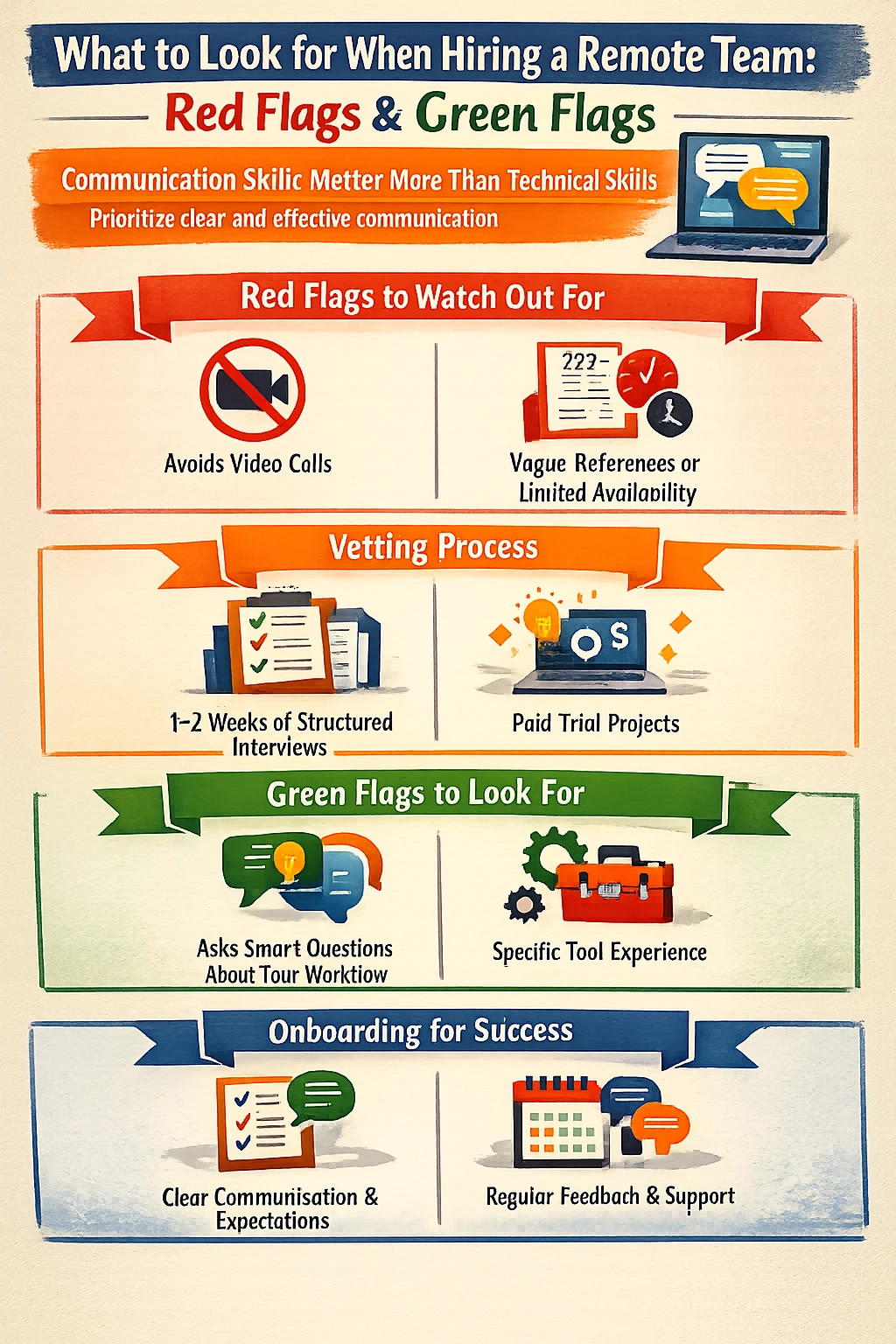
What to look for when hiring a remote team member
The short answer: hire for communication first, skills second. That sounds backwards if you’re used to hiring tradespeople, where the work speaks for itself. But with remote workers, their ability to communicate clearly and proactively is the actual job. A virtual dispatcher who goes quiet for three hours during a booking rush is a bigger problem than one who needs a week to learn your software. When you’re evaluating what to look for when hiring a remote team member, the process should start before the interview even begins. How quickly do they respond to your initial message? Is their email or message clear and professional? Do they ask a clarifying question or just send a generic reply? These small signals reveal a lot about how they’ll behave once they’re working for you. In our experience, the best remote hires are people who are already operating like professionals before you’ve given them any reason to. They show up on time to the video call. They’ve done a little homework on your company. They can explain their previous remote work experience in specific terms, not just “I work independently and I’m very organized.”
Red flags that tell you to walk away
 Some of these are obvious. Others are easy to rationalize away in the moment, especially if you’re desperate for help and someone seems mostly good. Don’t talk yourself into it. The biggest red flag in remote hiring? Resistance to a video call. If someone applying to work closely with you won’t show their face on a screen, that’s the end of the conversation. Same goes for candidates who are evasive about their current setup – whether they have a dedicated workspace, what hours they’re actually available, or what time zone they’re working from. Watch for vague references. Not “I can provide references” but references who, when you call them, say things like “yes, she was a contractor for us briefly.” That’s not a reference. That’s someone being polite. A genuine reference can tell you specifically what the person did, how they handled problems, and whether they’d hire them again. If you can’t get that from at least two people, keep looking. Another common red flag in the remote hiring process is candidates who over-promise on availability without being able to explain how they’ll deliver. “I’m always available” isn’t a schedule. Ask them directly: what does your typical workday look like? When are you offline? How do you handle an urgent message that comes in outside those hours? If they stumble on these questions, that’s the answer. Red flags also show up in how someone handles a small test task. If you send a 30-minute skills test and get back something that looks copy-pasted, rushed, or just plain wrong – that’s not nerves. That’s the work.
Green flags worth paying attention to
The people worth hiring tend to show similar patterns. They ask about your process before pitching their skills. They want to know how you communicate with your team, what tools you use, and how decisions get made. That kind of curiosity is a green flag because it tells you they’re already thinking about how to fit into your operation, not just how to get hired. Strong candidates for virtual assistant roles or remote bookkeeping positions will usually bring up specific tools unprompted – things like Asana, Slack, Google Meet, or whatever project management system makes sense for your type of work. They won’t just say “I’m good with computers.” They’ll say “I’ve been using Trello for task management with my last client and we set up a shared calendar in Google Workspace.” That specificity matters. Asynchronous communication skills are another green flag, and honestly one that gets overlooked. When you’re running jobs across Vancouver and you can’t always stop for a call, you need someone who can send a clear written update that actually answers your question. Ask candidates during the interview to walk you through how they’d handle a situation where they can’t reach you and a decision needs to be made. The ones who have a real answer – not a perfect answer, just a real one – are the ones who’ll manage well independently. Pay attention to how they receive feedback during the interview process itself. If you correct something or push back gently on an answer, do they get defensive? Do they adjust? People who handle small corrections gracefully during an interview will handle them gracefully on the job. The opposite is also true.
How to properly vet remote candidates
 Think of vetting a remote hire the way you’d think about checking the foundation before you start a renovation. You can put great work on top of a bad base, but it’ll cause problems eventually. A remote worker background check is worth doing for anyone who will have access to your financial records, client information, or scheduling systems. Start with a structured interview, not a casual conversation. Write down your questions beforehand and ask every candidate the same ones. This isn’t about being robotic – it’s about having a real comparison when you’re deciding. Ask about a time something went wrong in their remote work and how they handled it. Ask what they do when their internet goes out mid-project. These aren’t trick questions, they’re practical ones. Then run a paid trial. Even a two-to-three hour test project – a data entry task, a draft email response, a simple scheduling exercise – tells you more than an hour of interview questions. Pay them for it. That’s the professional way to do it, and it filters out people who aren’t serious. Reference checks aren’t optional. Call the references. Don’t email. A phone call is harder to dodge, and you’ll hear hesitation in someone’s voice in a way you won’t in a written reply. Ask specifically about reliability, communication, and whether they’d bring that person back. The Better Business Bureau and similar professional verification tools can also help you confirm that any agency or staffing platform you’re using to source candidates is legitimate. For roles like virtual bookkeepers or virtual marketing assistants where someone will handle sensitive information, consider a basic background screening service. Several reputable ones exist online, and the cost is minor compared to the risk of a bad hire.
Outsourcing mistakes that are easy to avoid
Remote team quality control doesn’t happen by accident. One of the most common outsourcing hiring mistakes we see is treating a remote hire like a vending machine: you put in money, you expect output, and you don’t think much about the relationship in between. That works until it doesn’t, and then it fails badly. The other mistake is hiring without a proper onboarding plan. You found someone good – great. Now what? If you don’t have a clear answer to that, you’re setting both of you up for frustration. Even a one-page document explaining your typical week, your communication preferences, your software, and your priorities is enough to get a remote hire oriented. Without that, even good people spend their first two weeks guessing. We’ve also seen homeowners and small contractors in places like East Vancouver fall into the trap of hiring the lowest bid. There’s a real market for remote help that advertises very low hourly rates, and sometimes those arrangements work out. Often they don’t, because the cheap bid comes with communication issues, slow turnaround, and work that has to be redone. Pay a fair rate and you’ll attract people who treat the work seriously. Employment and Labour Standards Canada has useful guidance on contractor versus employee classifications if you’re unsure how to structure the arrangement – worth a read before you send anyone an offer.
Setting up a remote hire for success
Once you’ve made a good hire, the job isn’t done. The first 30 days of a remote working relationship usually determine whether it becomes a long-term asset or a short-term headache. Structure that period deliberately. Check in daily for the first week – not to supervise, but to remove obstacles. Is there a tool they can’t access? A process that doesn’t make sense yet? A question they’re embarrassed to ask? Surface those early and you’ll save yourself weeks of confusion later. Establish communication norms upfront. When do you expect replies? What’s the right channel for urgent questions versus routine updates? These things seem obvious, but they’re not, and different people have very different defaults. A virtual service coordinator managing your bookings needs to know exactly how to reach you when a client cancels last minute at 7am on a Tuesday. Make that clear before it comes up. Give feedback early and often. Not constant criticism – actual feedback. “That invoice email you sent was exactly the tone I was looking for” is feedback. “That scheduling summary was hard to read – can you put it in a table next time?” is also feedback. Both matter. People working remotely can’t pick up on body language or overhear a hallway comment. Your written and verbal feedback is often all they have to calibrate against. Slack’s remote work communication resources have practical tips worth bookmarking if you’re setting up async workflows for the first time.
Frequently asked questions
Remote hiring raises a lot of specific questions, especially for smaller home improvement operations that haven’t done it before. Here are the ones we hear most often.
How do I know if a remote worker is actually doing the work?
Set clear deliverables and deadlines, and judge by output rather than activity. If a virtual assistant was supposed to organize your scheduling calendar and respond to three client inquiries by end of day, check whether those things happened. The temptation to install monitoring software is understandable, but research consistently shows it damages trust without improving results. Build a relationship where the work is visible, not one where someone feels watched.
Is it safe to give a remote hire access to my business accounts?
With the right precautions, yes. Use a password manager that allows you to share access without revealing the actual password. Set up role-based permissions where possible – for example, a bookkeeper may need read access to your bank statements but not the ability to move funds. Change passwords when the relationship ends. For higher-risk access, a signed contractor agreement and background check are sensible steps.
What’s the difference between a red flag and someone just being nervous?
Nervousness usually shows up as hesitation or slightly stilted answers, but the content of what someone says is still coherent and honest. A red flag is when the content itself doesn’t hold up – vague answers that stay vague when you follow up, references who can’t speak specifically to the work, or a pattern of excuses rather than explanations. Give candidates room to be human, but trust your gut when something doesn’t add up.
How much should I expect to pay for quality remote help?
It varies by role and location. A virtual dispatcher or service coordinator with a solid track record typically runs more than someone brand new. For highly specialized roles like virtual bookkeeping or marketing, expect to pay closer to what you’d pay a part-time local hire. Extremely low rates often come with quality trade-offs – not always, but often enough that it’s worth being cautious.
Can I hire someone in a different time zone?
You can, and for some tasks it works fine. If the role is mostly asynchronous – data entry, invoicing, content tasks – time zone differences matter less. If you need someone available during your working hours to handle client calls or coordinate with your crew, hire within a compatible time zone. Being clear about this upfront saves everyone a headache.
Wrapping up
 Hiring remote help is one of the smarter moves a growing home improvement business can make, but the process rewards patience. Vet carefully, run a paid trial, check references properly, and communicate your expectations before day one. The candidates worth hiring will make it easy to say yes – they’ll be clear, responsive, and genuinely curious about your work. The ones who make you hesitate usually deserve that hesitation. At HireNewTalent, we help homeowners and contractors across Vancouver and the surrounding area find the right people and the right support for their home improvement needs. If you’re not sure where to start with building out remote support for your operation, give us a call and we’ll help you work out what kind of help makes the most sense for where you are right now.